
The White Horse Waimate
Walk, bike or drive to Waimate’s White Horse
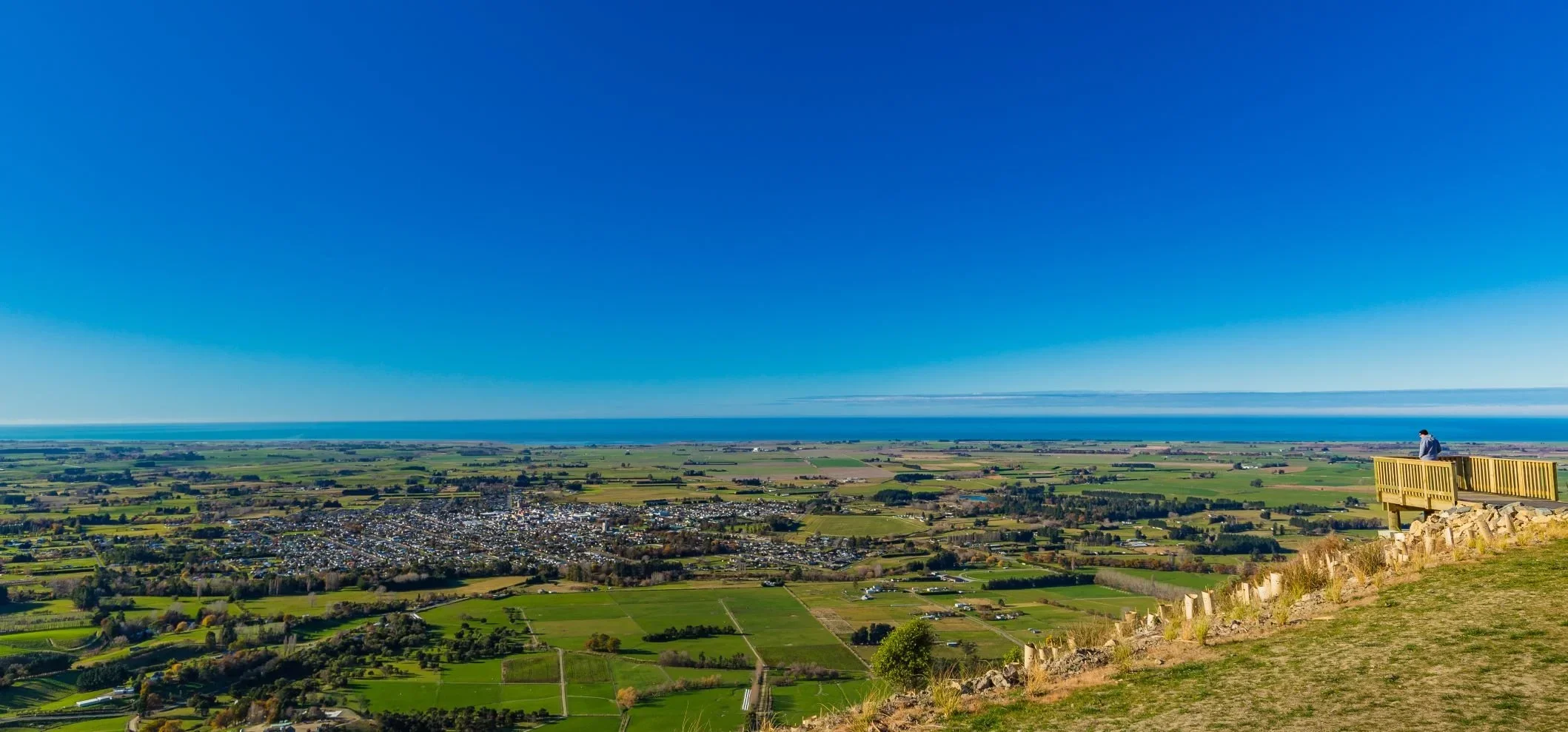
Waimate district’s rich agricultural history is celebrated by a large scale white horse monument on Mount John - looking out over the town to the Pacific Ocean.
You can walk, run, bike or drive up to it.The viewing platforms at the top, in Centrewood Park, are the perfect place to soak in the panoramic views of the Pacific Ocean to the Southern Alps.
How to visit the white horse
The Whitehorse Walkway climbs to Centrewood Park, home of the white horse.
It passes through Point Bush Ecosanctuary, where pest control has helped native forest regenerate and birdlife return, before emerging onto open hilltop grasslands with views stretching from the Pacific Ocean to the Southern Alps.
At the top you’ll find viewing platforms, a picnic area, information boards, pou and toilets. Check the Whitehorse Tracks and Trails map signage to plan your return - head back the same way, take a shared-use trail back to the lower carpark or, cross over into Studholme Bush Reserve.
Walk or run to the white horse:
Location: 228 Point Bush Road.
Usage:Walking/running.
Time/Distance:2 hours return.
Level of fitness:Moderate - steep in places, climbing from 145m to 400m.
Dogs: Not permitted.
Drive to the white horse:
Starting in Waimate, follow Mill Rd - Parkers Rd - Centrewood Rd - at the top you’ll find plenty of parking.
Whitehorse MTB trails
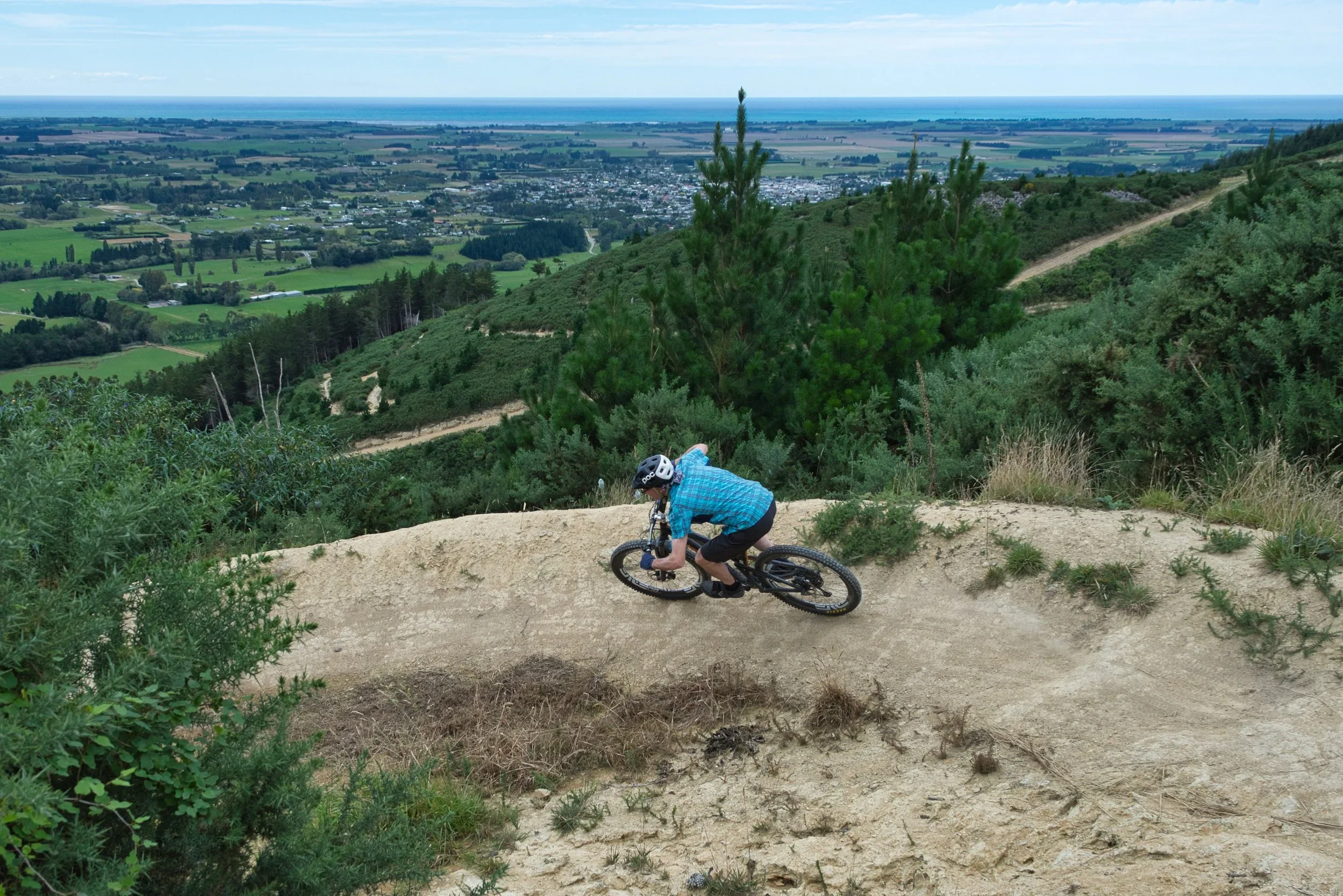
The hills above Waimate are filled with a network of popular trails that you can run, walk and bike - including the well-known Whitehorse Big Easy.
You can start at the bottom or the top of the hill. There are car parking areas at both ends. Trail map signs at both entrances will help you choose your ride.
Bottom carpark: 228 Point Bush Road.
Top carpark: Centrewood Park Rd.
Usage: A mix of MTB and shared use tracks.
Dogs: Not permitted.
A landmark tribute to working horses
Built in 1968, the white horse is a testament to one couple’s dream and determination. Retired farmer Norman Hayman returned from a European holiday inspired by a Friesian cow statue in Holland. He reckoned that the Clydesdale horse deserved a similar tribute for its contribution.
During the 1960s a Development Society was formed in Waimate to promote industry and holiday attractions in the district. Local farmer Jack Sutherland, of Centrewood, gave 10ha to the Waimate Development Society for a look-out and park overlooking the town. Norman put forward his suggestion for a Clydesdale horse statue, but the cost was too high.
In his own words, from notes he made at the time, Norman wrote:
’I then came up with a plan of a silhouette, twice the size of a horse, in a concrete slab on its edge. There was still doubt about the size being sufficient. Time was going on and no monument.
‘I was given the idea of the White Horse of England, which I tried with wallpaper on the face of the hill. This was the start of the action, but the steep rocky face of the hill was too heartbreaking to smooth over. My next move was to the smooth valley close by, not so good for viewing, but where I could work myself. A load of plaster board scrap from the dump, laid in outline, proved the monument would be too small, but I was in business, and ordered 200 paving stones.’
It took Norman, his wife Betty, and their helpers, three months to lay 1220 concrete slabs. The 2.5 ton head was precast in Ron Hutt’s yard.
The final cost was $240, met by donations from ‘old time’ farmers, teamsters, and others who admired the Clydesdale horse.
They chose the right spot – the horse was reportedly used as a landmark by fishermen at sea before they had GPS.
The original concrete base was refurbished over the years by the Waimate Lions Club, Rotary Club of Waimate and others in the community.
White Horse Monument dimensions
18.29m high
14.63m long
4.88m head (2.5 ton)
396.24m above sea level