
Waimate’s heritage sites
Food, farming and Waimate’s early history
Waimate’s past as a mahinga kai/food-gathering hub for Māori, and later as a frontier milling town on the edge of a forest is easy to connect with by following self-guided walks and visiting the district’s historic sites.
Moa, ancient Māori rock art, saw milling, churches, and great characters are all part of the story. The further you go, the more you’ll know!
While not all of these sites are open to the public, together they sketch out a timeline that stretches back hundreds of years (or BC if you count the unfortunate moa).
Scroll the historic sites below using the arrows.
-
![]()
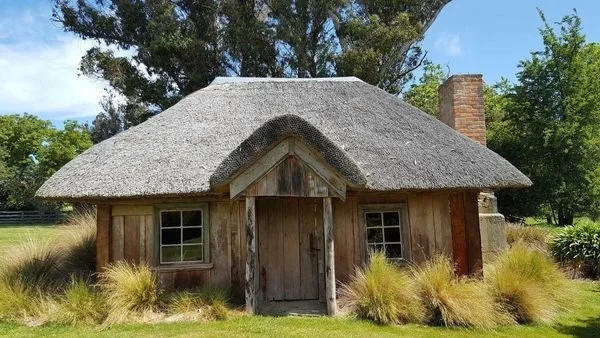
The Cuddy, 1854
The Cuddy built in 1854 was the first home of the Studholme family.
It was constructed from a single totara tree, with the roof being thatched.
It has been faithfully restored, and visitors are welcome to view it by contacting the Studholme family on 03 689 7199.
Te Waimate Station, State Highway 82, Waimate.
-
![]()
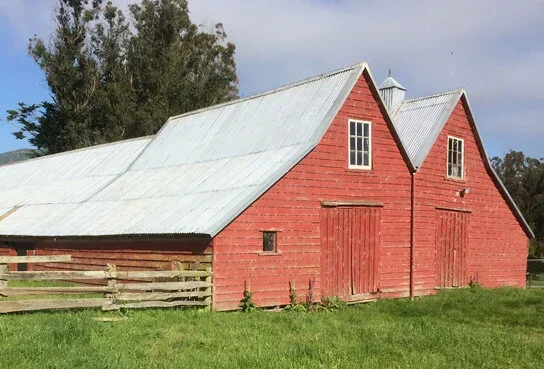
Te Waimate Woolshed, 1855
Listed category 1 historic place on the Heritage New Zealand register.
The older part of the woolshed was built by Michael Studholme and his brothers in 1855. A lot of the timber is adzed, and all the inside timber is pit-sawn totara.
In the peak period of station history nearly 100,000 sheep were shorn annually in the shed. Early steeple chasing events were also run from the shed.
Te Waimate Woolshed is one of the most attractive and historically important of any in New Zealand; and is one of the oldest working woolsheds in the country. Permission is needed by the owners to view.
Te Waimate Station, State Highway 82, Waimate
-
![]()
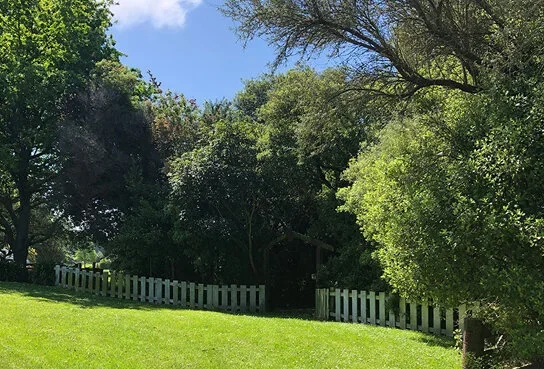
Māori Cemetery, 1861
Originally a seasonal birding camp for local Māori, the area within the vicinity of the cemetery became the permanent home of the Te Waimatemate hapu.
Chief Te Huruhuru died in 1861 and was buried within the cemetery enclosure. The sites of individual graves, including that of Te Huruhuru, cannot be pinpointed precisely.
In 1934 the cemetery was taken over by the Waimate Borough Council and a monument was erected to mark the burial place of the Chief and other members of the Māoricommunity.
The monument is surrounded by native bush and is also near the site of the first Māori church that was built in Waimate in 1860.
Te Huruhuru Road, Waimate
-
![]()
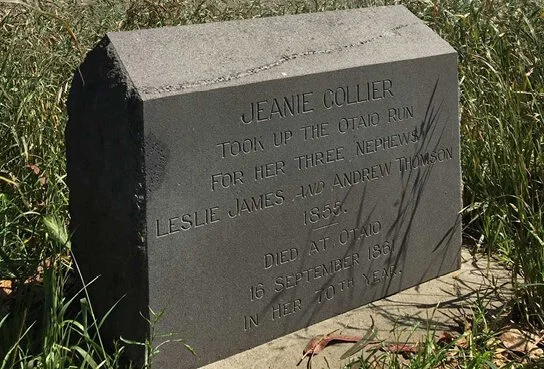
Jeanie Collier Grave, 1861
Tucked away in a paddock on a quiet country road is the historic reserve dedicated to Jeanie Collier, the first woman runholder in South Canterbury, and the first European woman to live in the Waimate District.
Jeanie was born in 1791 or 1792 at Monimail, Fife, Scotland. She came to Canterbury in 1854 with her three orphaned nephews, and set about establishing them on the land. In 1855 she was granted a licence. The runs covered 11,534ha between the Otaio and Makikihi Rivers, and another 11,534ha between the Makikihi and Hook Rivers, both from the sea inland.
Jeanie Collier died in 1861, and was buried near the site of the home she established in the wilderness of tussock, flax and fern. Her grave was marked with a headstone in 1955, in a reserve of gum trees.
Horse Shoe Bend Road, Otaio.
-
![]()
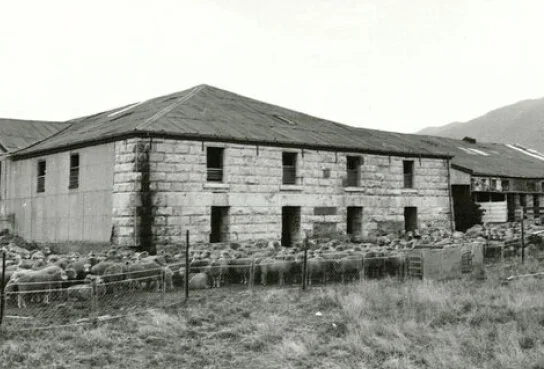
Hakataramea Station Woolshed, c1868
Listed category 1 historic place on the Heritage New Zealand register.
The woolshed, a T-shaped building of limestone, originally with 24 stands, dates from around 1868, when the Land Company took over the property.
It is the only completely stone woolshed in South Canterbury.
The shed featured a slatted floor, familiar nowadays, but at the time this was seen as a novelty. It is still used as part of a working farm, although not for shearing sheep.
Hakataramea Valley Road.
-
![]()
Waimate Old Cemetery, 1871
Established in 1871, the Waimate Old Cemetery covers an area of 2.33ha.
The headstones tell the stories of the early settlement of Waimate. The scourge of tuberculosis, influenza and scarlett fever is reflected by the inscriptions.
The earliest grave markers were made of wood and Waihao stone. As the settlement prospered, other New Zealand stones including granite were used, alonag with granite from Cathiners in Scotland and Carrara Marble from Italy.
An information board just inside the gates of the old cemetery highlights ten of Waimate's early settlers buried there, including Dr Margaret Cruickshank and former Prime Minister Norman Kirk.
McNamaras Road, Waimate.
-
![]()
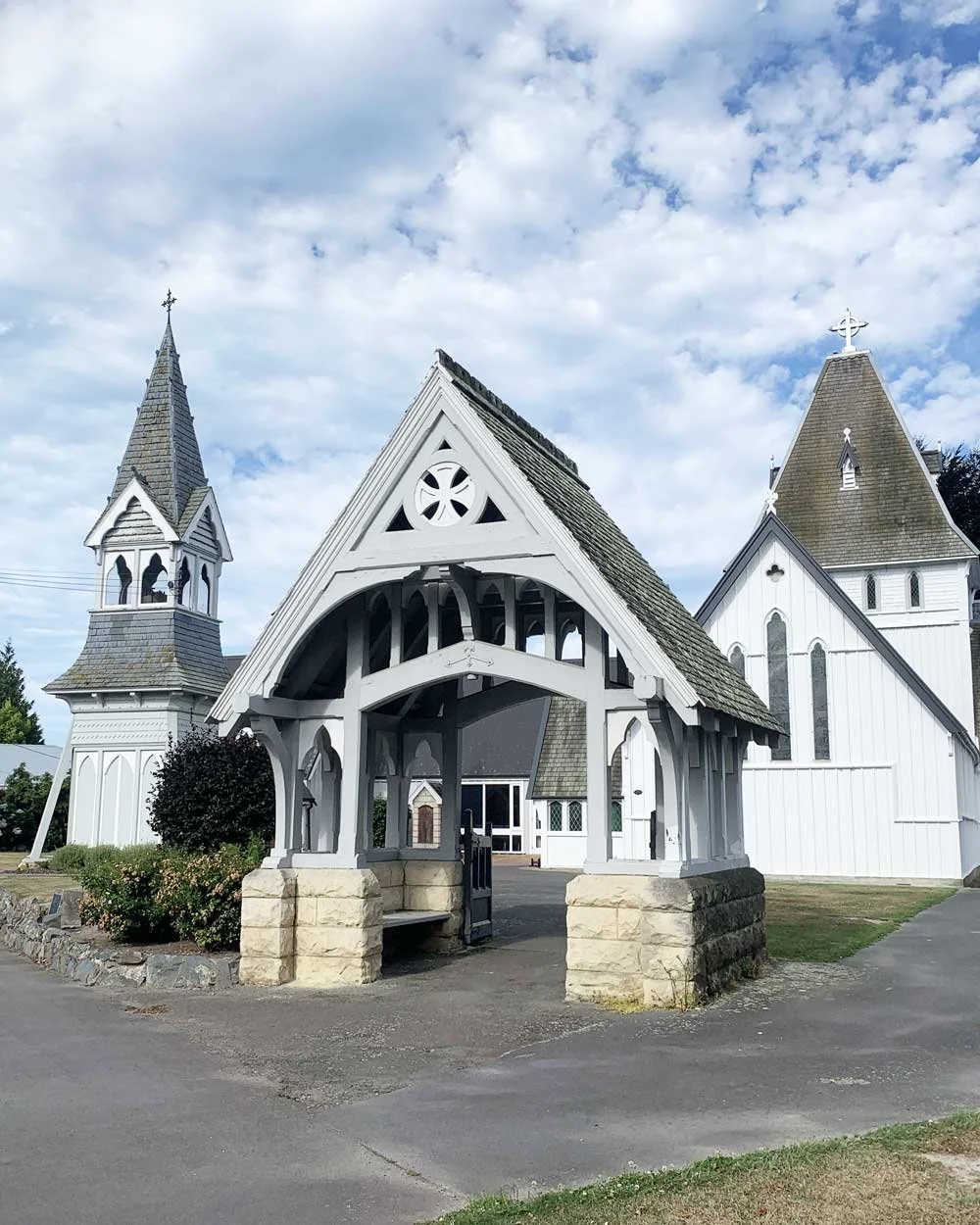
St Augustine's Church, 1872
The land for the church was gifted by Michael and Effie Studholme.
Matai and totara were hauled from the Waimate forest in 1872, and the church was designed by Benjamin Mountford and built by J.W. Gaitt and G. Dickson for 350 pounds. When it was enlarged in 1889, S. Collett added the distinctive lantern tower using local kahikatea.
Among the stained glass is a sanctuary window based on a design by Sir Edward Burne-Jones. The church also holds two of Aotearoa New Zealand’s few windows designed and made by the English firm Morris & Co. In 1902, Effie Studholme gifted the Lych Gate in memory of her husband and their two sons.
John Street, Waimate
-
![]()
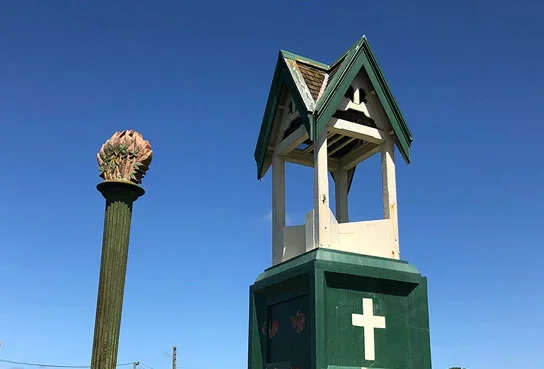
The Bell Tower, 1874
The intersection of Manse and Belt Street’s is the site of a historic Bell Tower, which was salvaged when the first Presbyterian Church in Waimate was demolished in 1934.
The church (1874 - 1934) was gothic inspired. Featuring ornate details and tall pointed arches. It was opened to the public for by Reverend AB Todd in August, 1874. After 60 years of service the decision was made to demolish the church to make way for a new church, which is still in service today.
The framing of the tower is made of the mighty totara this area was known for.
Intersection of Manse and Belt Streets, Waimate.
-
![]()
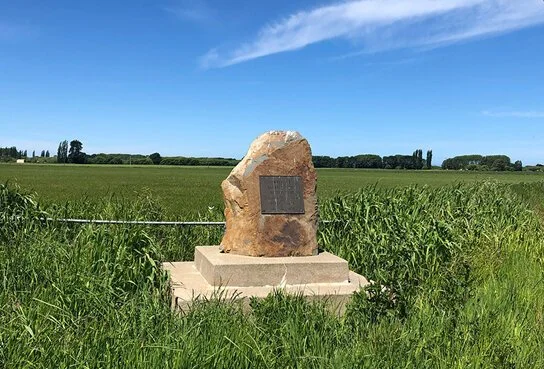
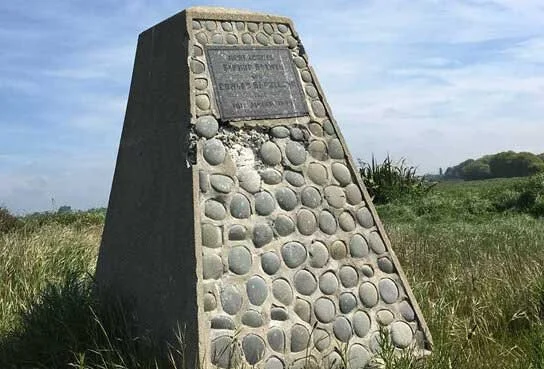
First Grand National Steeplechase, 1875
A stone cairn at Willowbridge (corner Bradshaws and Willowbridge roads) marks the site of New Zealand's first Grand National Steeplechase, held on May 18, 1875.
The steeple chase was held on the farm of Mr M Studholme. A general holiday was observed so town and country could join in the fun. There was a max exodus from Waimate to the site at around 11am on the day, “from the light buggy to the heavy six-horse wagon” plus people walking and on horse back - a very “animated” crowd.
It was a day out full of entertainment, the busiest people on the day were the assistants to the wine and spirit booth. “The amount of liquor consumed on the occasion was something surprising and not without effect”. This resulted in a few fist fights, and a police horse getting spooked and knocking over the wheel of fortune and the woman running it! Thankfully she was unhurt.
Intersection of Bradshaws Road and Willowbridge Road in Willowbridge
-
![]()
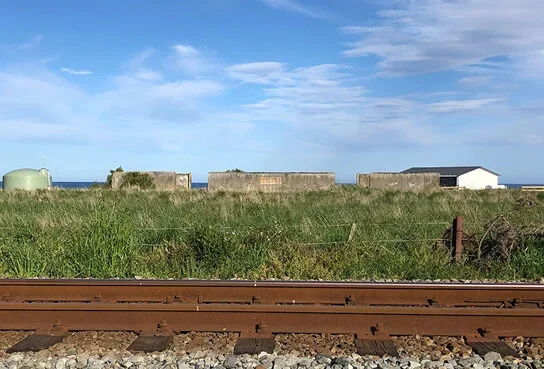
New Zealand Australia Land Company Granary, 1878
At the entrance to St Andrew's between the railway line and the sea, stands the remains of a concrete granary.
The granary was built in 1878 on the Pareora Estate to store grain before freighting by rail to Timaru and points beyond. Close by an information board tells more of the history of this area. The large concrete foundations and walls are still there today holding a local government Heritage C listing.
In a national context, although concrete was imported in small quantities as early as 1843, it was not widely used in NZ until the late 1870’s. This is therefore one of the earliest examples of concrete construction still standing.
St Andrews was named after Andrew Turnbull, a local manager for the New Zealand and Australian Land Company. He had a reputation for using colourful language, so was ironically nicknamed ‘Saint’.
-
![]()
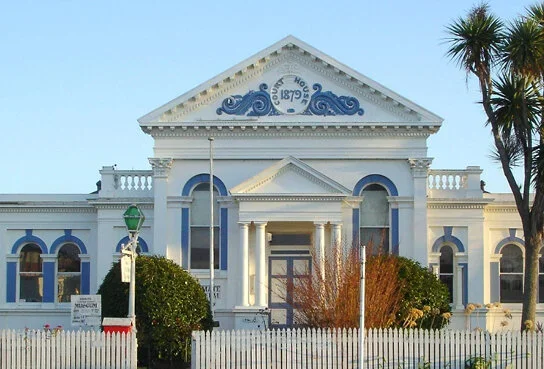
The Waimate Courthouse, 1879
The Waimate Museum and Archives is home to an impressive collection of 11 historic buildings - including the 1879 courthouse - showcasing over 100 years of architectural styles.
The museum and archives are a wonderful memory bank for the district, and a must-see for visitors and researchers.
Shearman Street, Waimate
-
![]()
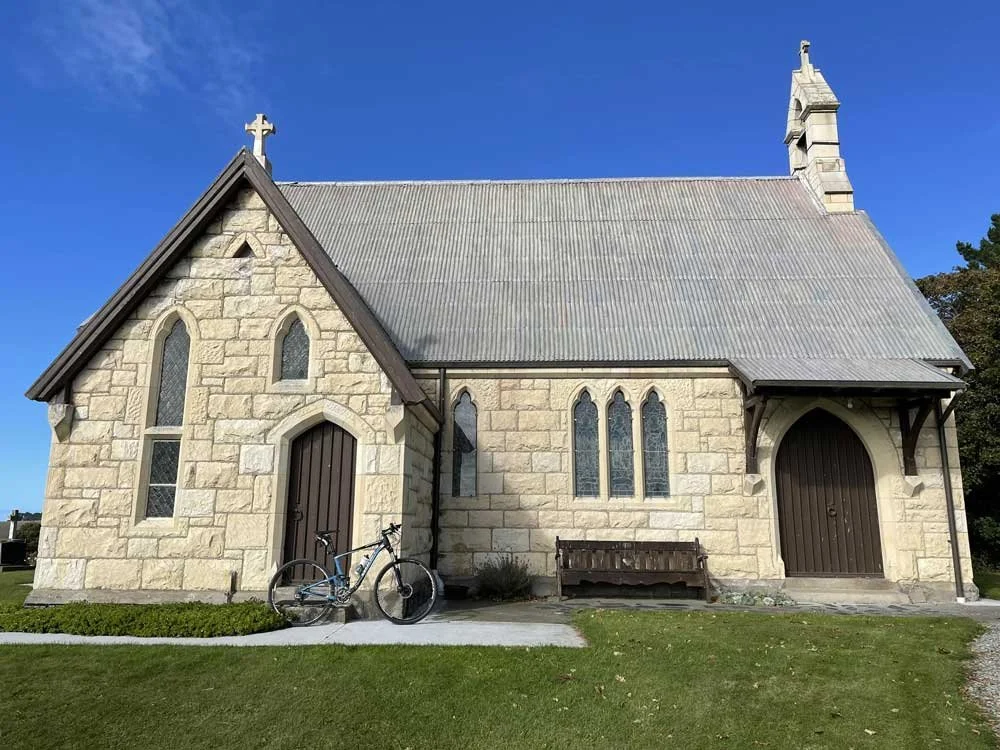
St Mary's Church, 1880
St Mary's Esk Valley was designed by Christchurch architect B.W. Mountford and built of limestone from Albury district.
The church had its origins in tragedy. In 1878 Ellen, the young wife of Charles Meyer, owner of Blue Cliffs Station, died following an operation. Charles instructed his trustees to build the little stone church to fulfil his wife's wish and to her memory.
The church was consecrated in May 1880 by Bishop Harper.
The interior is rich with colour from windows dedicated to members of some of the early settler families in the district.
95 Church Hill Road, Otaio
-
![]()
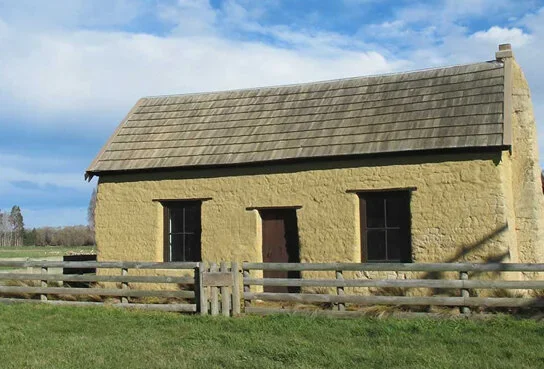
Paterson's Cottage, 1880
Paterson’s Cottage, is an historic building visible from the Waimate-Hakataramea Highway (SH82), between Waimate and Kurow.
This cob cottage is believed to have been built about 1880 from Penticotico clay and tussock.
James Paterson and his family lived here. They used to sell liquor and casual accomodation.
The original cottage had a main room with an open fireplace. A loft which would have been the sleeping quarters ran the length of the building. Behind the main room, was a lean-to running the length of the building; historians state it would have been the kitchen area.
The building has been restored by local supporters and the New Zealand Historic Places Trust.
State Highway 82, Hakataramea
-
![]()
St Paul’s Methodist Church, 1888
Contains memorial windows (1929) to the district’s pioneers including the Manchester Brothers, John and George, who were the founders of the church.
John Manchester was the first Mayor of Waimate. Other windows include one to Samuel W. and Eliza Goldsmith ‘Zealous of Good Works’, and to Alpheus and Anna Hayes.
Now a private home.
Glasgow Street, Waimate
-
![]()
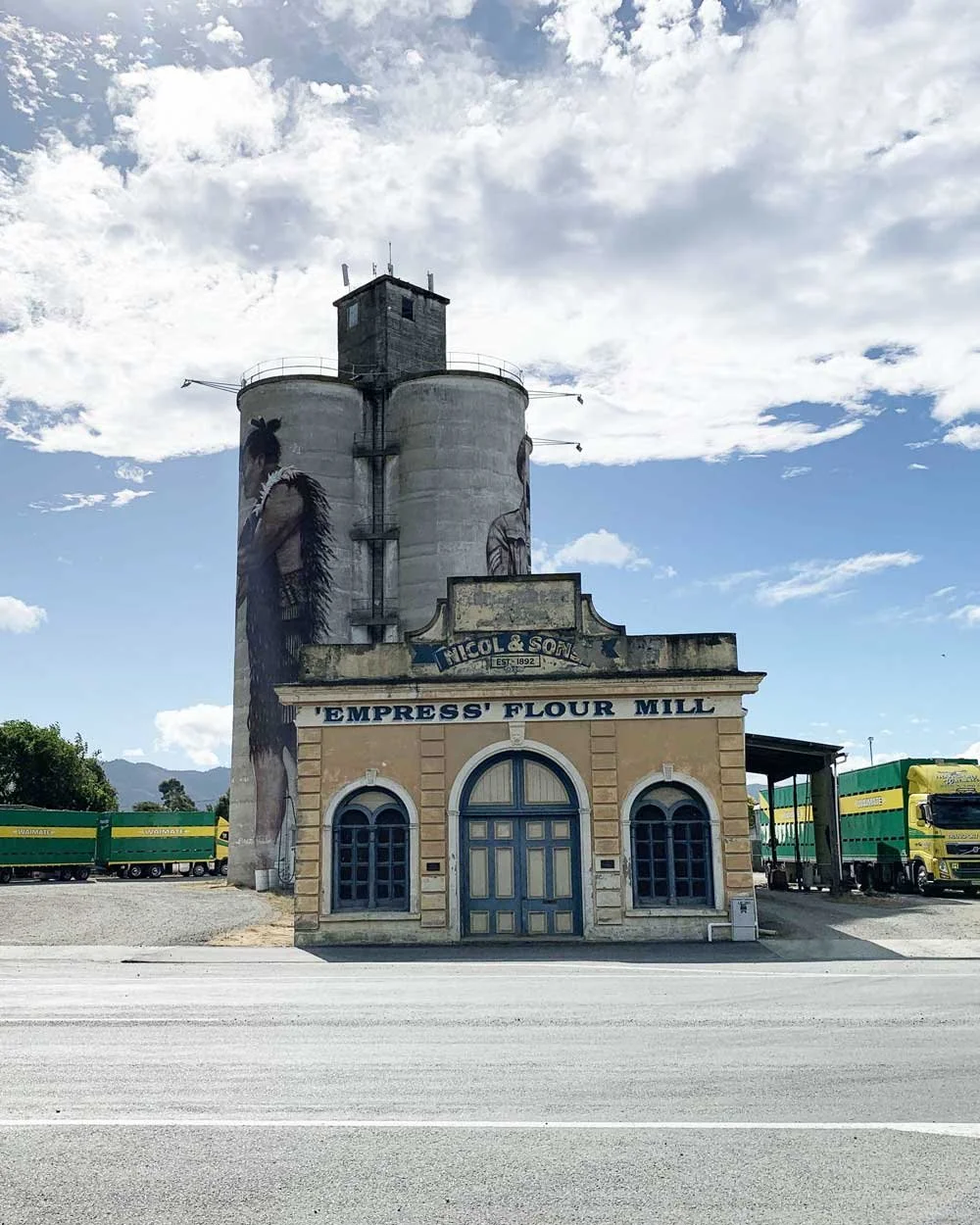
Nicol and Sons Empress Flour Mill, 1890
This mill was established by Robert Nicol in 1890, close to the Waimate Railway Station (closed in 1966).
Five hands were employed producing annually 300 tons of flour for local consumption, and 1000 tons for shipment. The Waimate flour won first awards in open competition at the Anglo-Japanese Exhibition in London, 1910, at the Festival of Empire, London, in 1911, and at the Auckland Exhibition 1912-14.
The company expanded its storage, opening the Waimate silos in 1921. Unfortunately, soon afterwards, the Government introduced a quota on wheat outputs. The outcome was that the company sold its plant to the Waimate Transport Company Ltd, and wound up the business.
Queen Street, Waimate
-
![]()
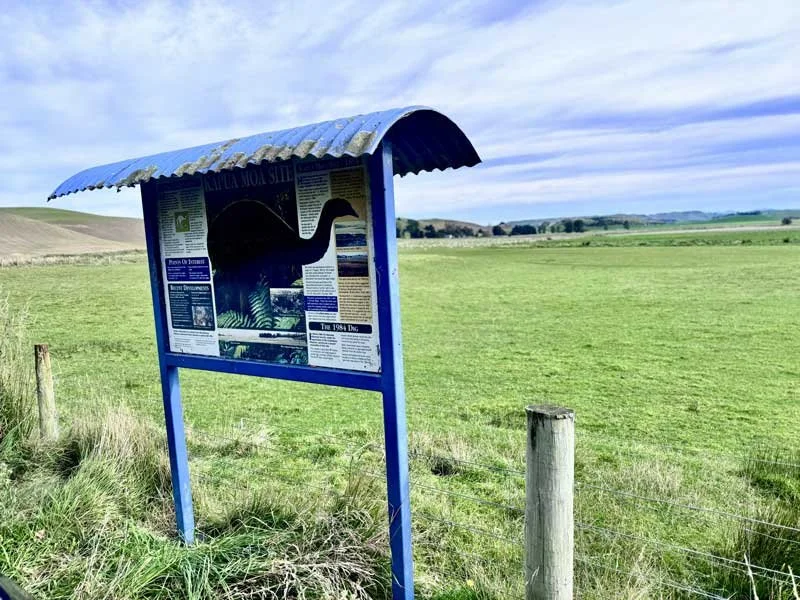
Kapua Moa Site, 1894
Just off Kapua Road, near the end of the Waimate Gorge, a stretch of farmland holds a remarkable story.
In 1894, it was the site of the largest moa bone discovery ever found in New Zealand. There’s an information panel on the roadside marking the spot.
The area was once a lagoon, known by Māori as the “Lake of Mirrors” or “the clouds turned around”.
Kapua was a feeding ground dotted with spring holes linked to underground water. As moa grazed across the swamp, some stepped into holes hidden by vegetation and couldn’t climb out. Over many generations, their bones settled into the springs.
The birds have been dated to between 1014 and 714 BC.
Kapua Road, Arno
-
![]()
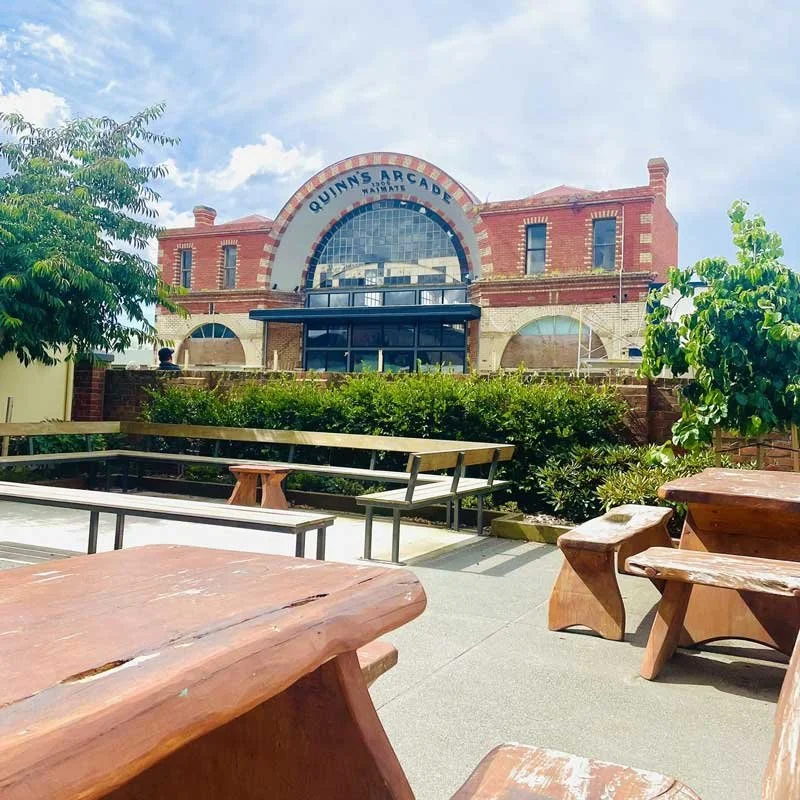
Quinns Arcade, 1906
Quinns Arcade was built in 1906 by William Quinn - who had a brickworks at Makikihi - and was designed as an indoor shopping arcade of 12 small shops running between High and Grigson Streets.
The shopping arcade wasn't a success, so in 1918 it was remodelled into a movie theatre and billiards hall. The theatre opened in 1920 and operated successfully until a fire in 1955. Since that time the arcade has been used for a range of shops and storage.
High and Grigson Streets, Waimate
-
![]()
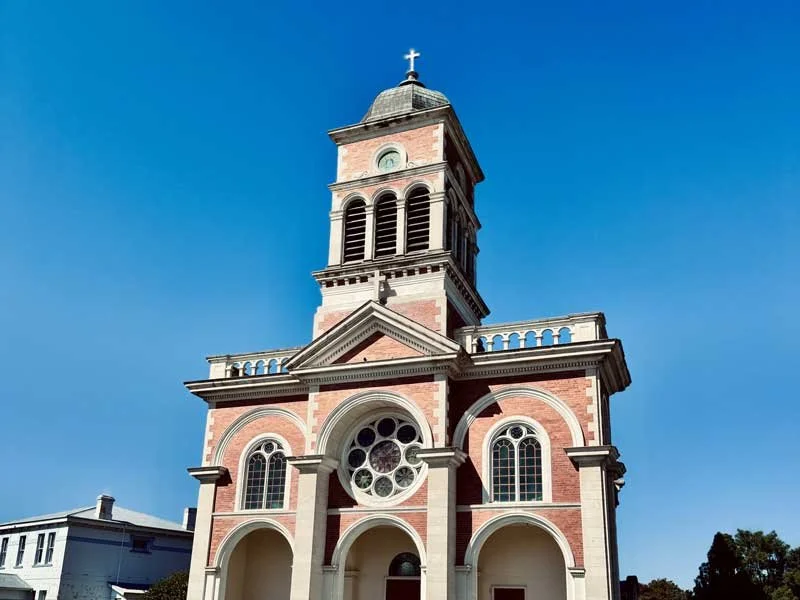
St Patricks Church, 1908
The first Catholic Church was opened in 1877, and the first St Patrick’s School in 1880.
The ‘new’ church was built in 1908 and opened on 24 October 1909.
This church replaced the original, built in 1876 of heart timber milled in the Waimate bush. It was moved to Washdyke in 1934 and was demolished in 1998. The rose window at the front of the church is 4.2 metres in diameter. The three bells in the tower were cast in Belgium; the largest weighs 15cwt (3/4 ton), the other two 10cwt (1/2 ton). The church was renovated in 1954.
The fourteen "Stations of the Cross" paintings are originally from St Mary's Church at Makikihi. Hannah is the name that was given to the magnificent pipe organ.
Timaru Road, Waimate
-
![]()
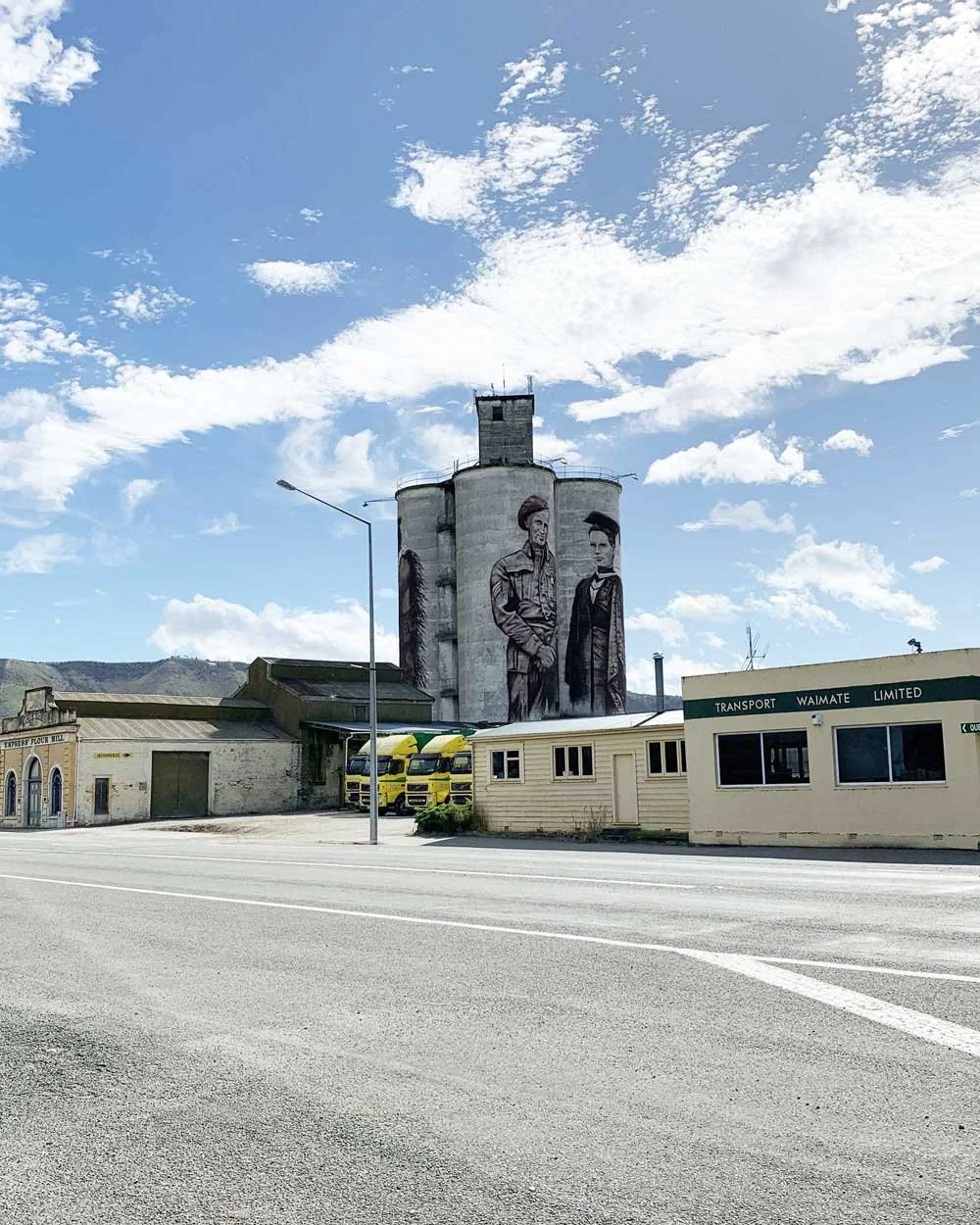
The Waimate Silos, 1921
Before the White Horse monument was built, Waimate’s main landmark was the wheat silos, which opened in 1921 to serve the Waimate Flour Mill.
Wheat is part of the enduring story of Waimate - the first flour mill was established at Willowbridge in 1875.
The silos were built next to the Nichol and Sons “Empire” Roller Flour Mill when more storage was needed. But soon afterwards the mill was closed and the silos weren’t used at that time. Later, in 1955, sacks of wheat were stored on the silo floor. And later again, Flemings Company installed sleeves in each silo bin, with a storage capacity of 4000t for wheat, barley and oats. Grain is still grown in the district, but today’s crops are usually carted immediately to Timaru, or stored in silos on-farm.
The silos are 35 metres high, including the little ‘house’ on top, and are now painted with incredible murals.
Queen Street, Waimate
-
![]()
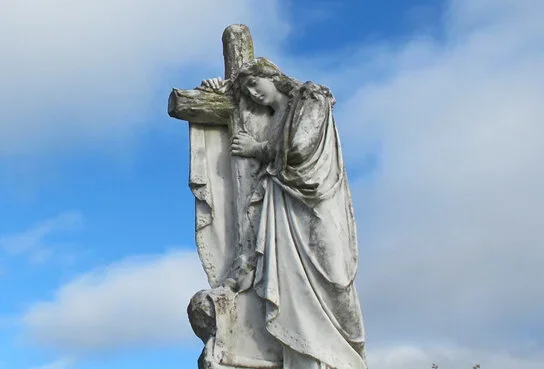
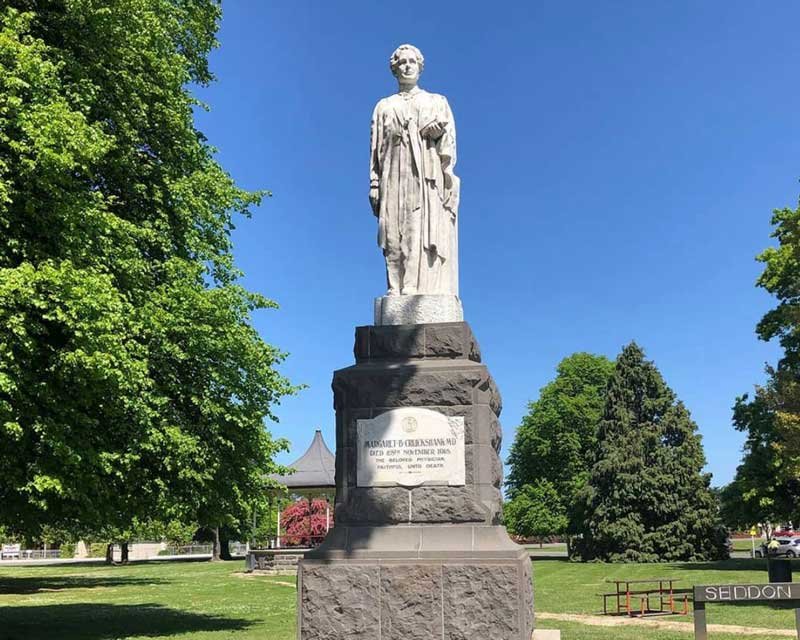
Dr Margaret Cruickshank statue, 1923
One of the district’s most illustrious citizens Dr Margaret Barnett Cruickshank, was the second woman to graduate in medicine in New Zealand, and the first to go into general practice - in Waimate, in 1897.
She was born in Palmerston, Otago, in 1873.
In 1913 she went to Britain to study, after a public send-off when the district gave her a gold watch and chain, and a purse full of sovereigns. She returned in 1914, and shared the superintendency of the Waimate Hospital.
She died on November 28, 1918, a victim of the flu epidemic.
Dr Cruickshank is the only person commemorated in the district by a marble statue of herself. The statue was unveiled in 1923, and bears the inscription ‘The Beloved Physician, Faithful Unto Death’. She is also represented on the painted silos.
Seddon Square, Queen Street Waimate
-
![]()
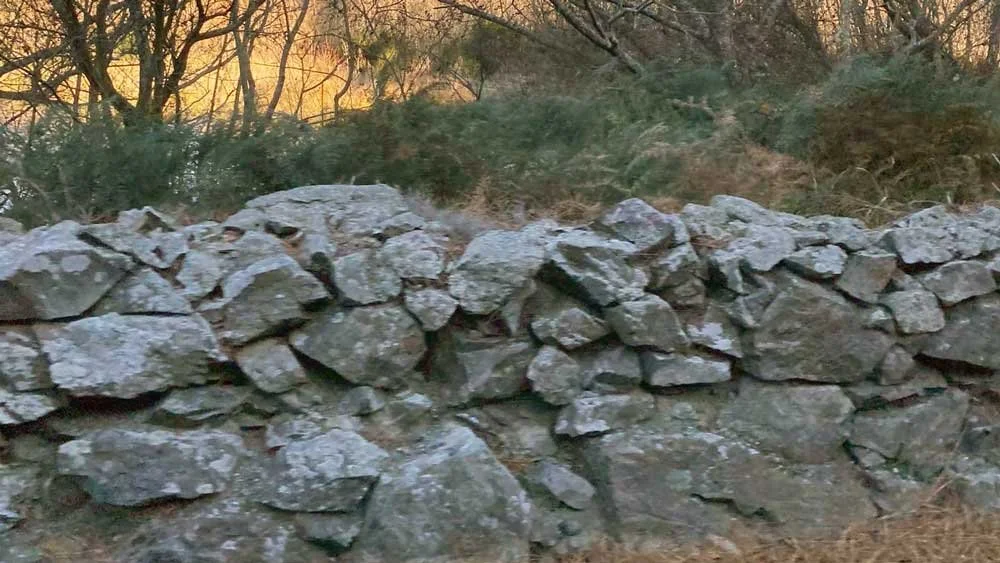
The stone wall, 1930s
A stone wall on SH82 at Ikawai is a barrier between the road and a sharp drop to the Waitaki River.
Built from large stones to confine the road, the wall runs for several kilometres along the banks of the Waitaki River.
It was constructed under labour work schemes during the 1930's depression years.
The stone wall is visible as you drive along the road but please note there is no safe place to stop and take photos.
State Highway 82, Ikawai
-
![]()
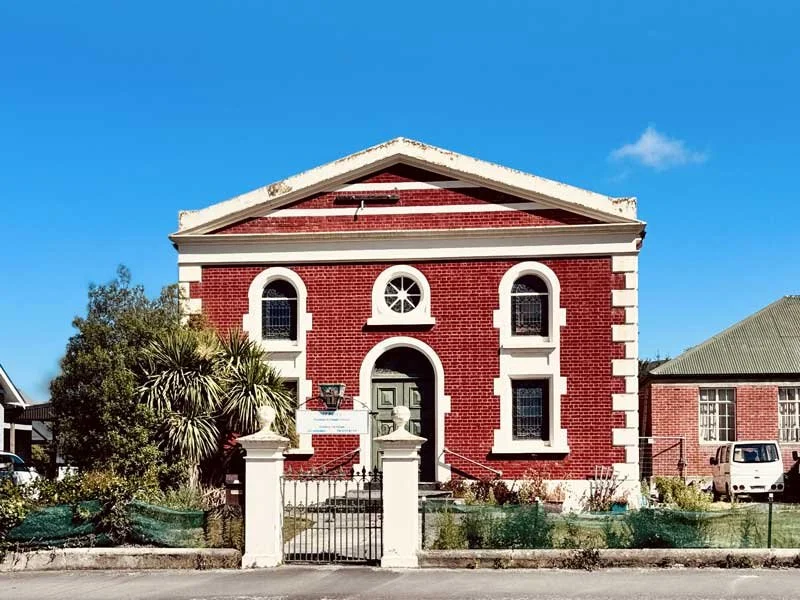
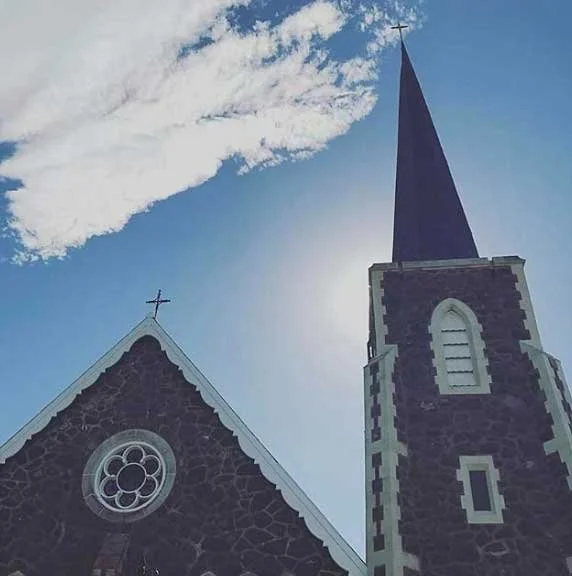
Knox Presbyterian Church, 1934
The first church was built in 1874, was of wood in Gothic form and was built on this site.
It was demolished in 1933 to make way for the present church, built 1934, 60 years to the day from the laying of the foundation stone of the old church—12 March 1874.
The foundation stone of the old church is set in the wall at the back of the apse. Most of the stone for the church was taken from the river bed near McCulloch's Bridge, with the inclusion also of stone from the Waituna and Hook districts served by the church. The communion table, timber in the roof of the apse, and the rafting were preserved from the old church.
The two memorial windows in the front of the church and the circular window above them, the pipe organ, as well as the bell tower that can be seen at the top of Manse Street are also from the old church.
Corner of Shearman and Manse Streets, Waimate
-
![]()
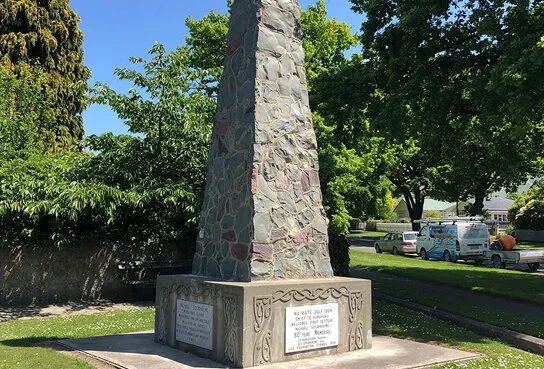
Te Huruhuru Monument, 1934
Erected in 1934 to commemorate the meeting place between Chief Te Huruhuru and Michael Studholme.
It was officially opened by Joseph Thomas Te Huruhuru (grandson) and E.C. Studholme (son).
The painted silo overlooking the monument also commemorates this meeting.
Junction of Queen Street & Gorge Road, Waimate
-
![]()
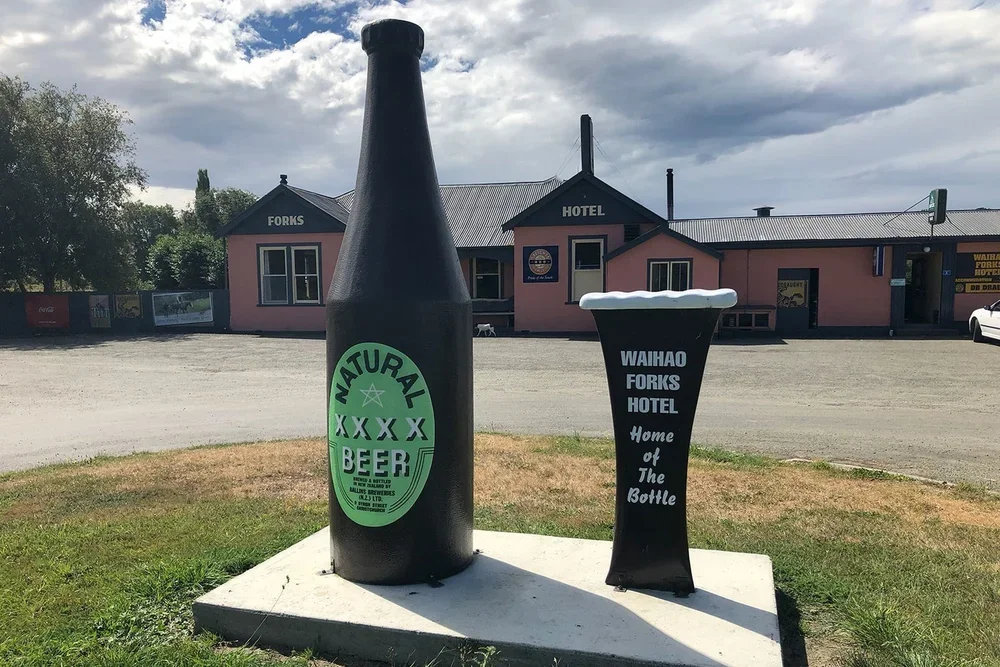
Ted’s bottle, 1940
A bottle of beer has remained unopened behind the bar of the Waihao Forks Hotel since WW2.
The bottle was left there by Private Ted d'Auvergne when he set off for war in January 1940. He told the publican he would drink it when he got back, however he was killed in action in Crete in 1941. The bottle remains as a unique memorial to Ted, and all the young New Zealanders who lost their lives, thousands of miles from home in WW2.
State Highway 82, Waihao Downs
-
![]()
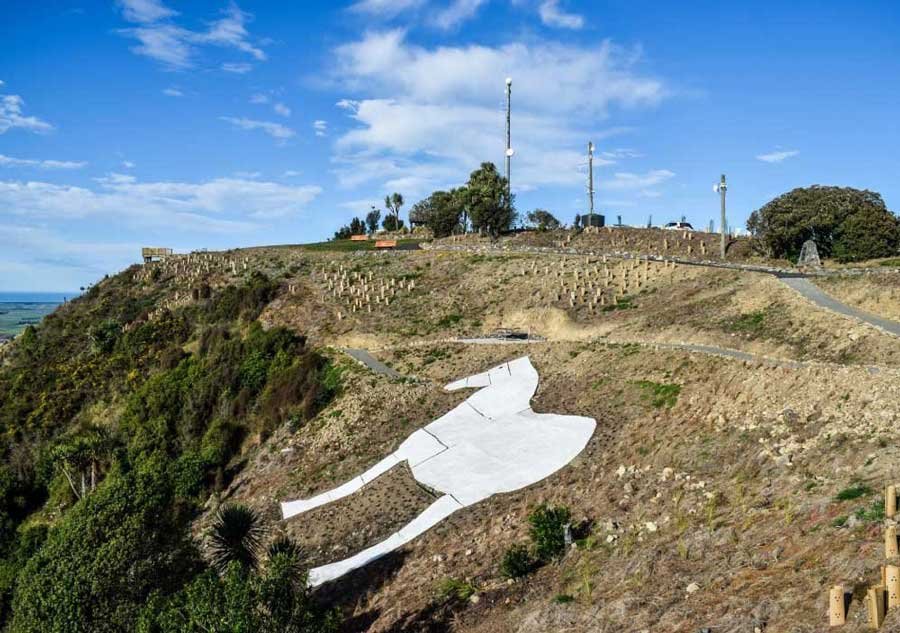
The White Horse, 1968
In commemoration of the work done by the Clydesdales in the agricultural development of Waimate.
The White Horse was made from 1220 concrete slabs with the head being over 2.5 tonne.
The monument was the inspiration of Norman Hayman and modelled on the Whitehorse of England.
Centrewood Park, Hunters Hills, Waimate
-
![]()
Stone Cairn, Hook Beach, 1969
Erected in memory of the unexpected meeting on 16 January 1844 between two early European travellers.
Bishop Selwyn, heading south on his first big trip around the South Island, met Edward Shortland, sub-protector of Aborigines, who was travelling north compiling the first census of South Island Māori. They camped the night together at Hook Beach.
The concrete monument was built by members of the Waimate Historical Society, and unveiled in 1969 by the New Zealand Māori Bishop of Aotearoa, the Right Rev Manu Bennet.
Hook Beach. Turn onto Hook Swamp Rd from State Highway 1, and then turn on to Hook Beach Rd.

Heritage tours
There’s more history waiting on the Waimate App - including details on the Edwardian buildings along the main street, ghost signs and all.
You can view two self-guided tours online, no download required:
Waimate Heritage Sites
Waimate History Drive
If you’re keen to dig a little deeper, head to the website and have a look.